
Victoria House: Retaining Charm and Comfort in a Net-Zero Renovation
The Challenge
Victoria House: Retaining Charm and Comfort in a Net-Zero Renovation
Building net-zero structures is the latest frontier of eco-friendly design. While it’s gaining ground in the commercial space, it can still feel ambitious for homeowners.
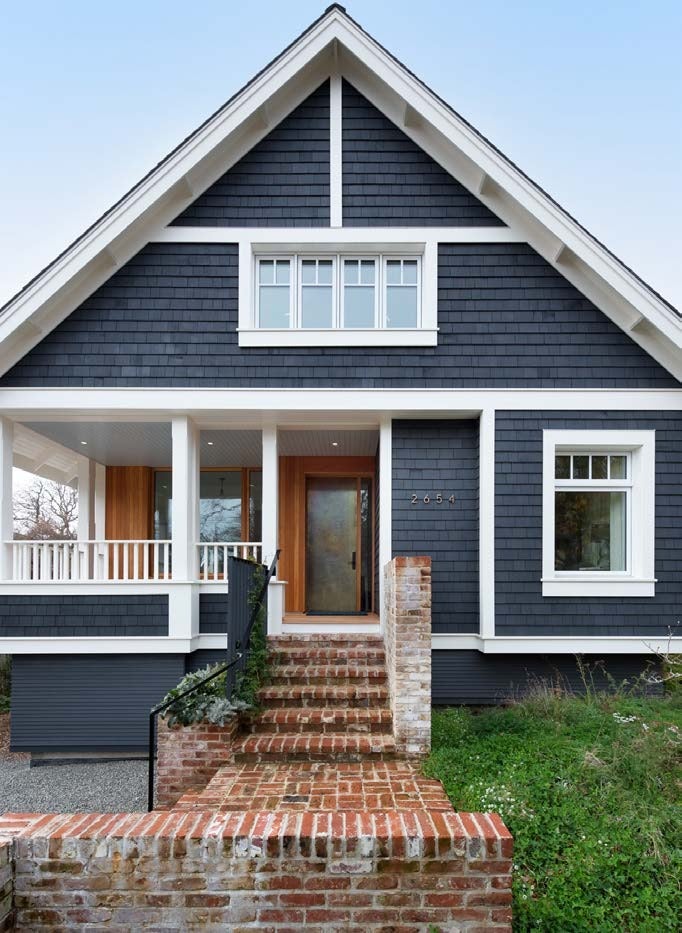
Enter Wendy Littlefield and Don Feinberg. When they purchased their home in the Fernwood area of Victoria B.C. in 2018, they knew they wanted to make some changes.
While the arts-and-crafts-style home was a great find in a hot market, the house also looked dated and was extremely inefficient when it came to energy use - the heating barely took the chill off. In fact, a blower door test and resulting EnerGuide report revealed it was using 292 gigajoules of energy per year, which is hundreds of GJ over the average home-energy use in the area.
Committed to doing what they can to fight climate change, Wendy and Don didn’t want to only slightly improve the energy efficiency of the house by doing a bare minimum of updates. They decided to go all the way and transform their house into Victoria’s first net-zero home. It would produce at least as much energy as it used.
The goal was to modernize the 1912 house to reach net-zero emissions without sacrificing style and comfort - all on a budget reasonable enough for the house to serve as a model for others.
“We’re on a busy street, but the house is now like a sanctuary. It has quiet, even heat which was really important to us.” Wendy Littlefield, homeowner
The Solution
As a condition of sale, the old oil tank heating system had to be removed. This gave Don and Wendy the opportunity to choose a more eco-friendly and energy-efficient method of heating and cooling their home.
A heat pump was a clear choice for them. Because heat pumps transfer heat, rather than generate it or cool it, they are highly energy efficient. They also reduce the use of fossil fuels because they are electric.
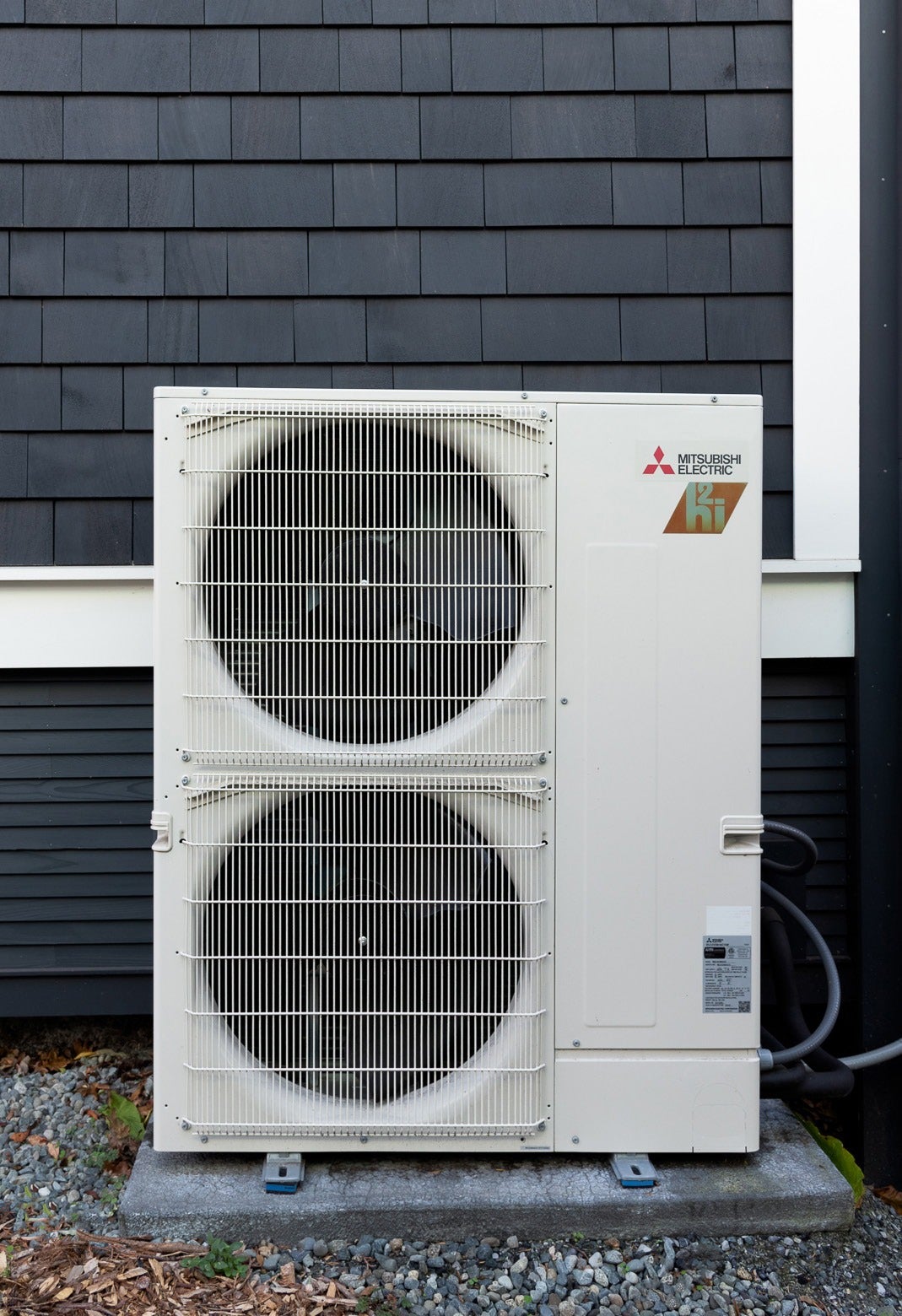
Based on recommendations from Frontera Homes as well as energy modeller and contractor Mark Bernhardt and others, Wendy and Don chose to move ahead with a Mitsubishi Electric Heat Pump. They considered a few options, but Wendy says the pair were “advised again and again that Mitsubishi Electric units are all about performance, efficiency and quality.”
Contractor Taylor McCarthy of Frontera Homes, who oversaw the retrofit renovation, describes the Mitsubishi Electric Heat Pump as a phenomenal product in terms of its energy modelling, alongside a fair price point and quiet operation. Architect David Scott, who designed the house with his partner Susan, agrees.
“Taking a home to net zero, you need to have a high-efficiency heat pump. The Mitsubishi Electric heat pump stood out for performance, including sound characteristics.” David Scott, Scott + Scott Architects
“As we’re moving to electrical, the Mitsubishi Electric Heat Pump stands out as high performing.” David Scott, Scott + Scott Architects
The Results
After years of research, planning and a lengthy construction process during the pandemic, Wendy and Don received their occupancy permit in March 2021, and they are thrilled with the heating and air conditioning in their updated home.
“The house is now like a sanctuary. It is far superior to any system we have had in any home in which we have lived.” Wendy Littlefield, homeowner
On top of creating a comfortable living space, the heat pump was a key element in reaching their target of net-zero emissions.
In March 2021, another EnerGuide blower door test confirmed that their home creates more energy than it produces in a year, effectively achieving net-zero emissions. Thanks to the heat pump and other energy-efficiency modifications, the home now uses 37 GJ per year. Before the renovation, space heating represented 86% of total energy use; now it’s only 21%.
What’s more, the heat pump integrated well in the overall design of the space, as the Scotts and Frontera Homes were able to seamlessly fit the units in new ductwork alongside the rest of the HVAC system. This avoided the need for wall units and allowed them to stay true to their aesthetic vision for the home. Being able to make a net-zero home that also looked good was a critical part of showing others what’s possible with a net-zero renovation.
Summary
Homeowners: Wendy Littlefield and Don Feinberg
Architect: Scott + Scott Architects
Contracting firm: Frontera Homes; Bernhardt Construction
Location: Victoria, British Columbia
Industry: Residential
Size: 1,800 square feet
Challenges: Support the net-zero function, provide strong quality, meet budget and aesthetic.
Selection Criteria:
- Increase energy efficiency
- Reduce carbon footprint, contribute to net-zero emissions target
- Electric, not gas
- Can work with style, design, aesthetics
- Heating Seasonal Performance Factor (HSPF)
- Seasonal Energy Efficiency Rating (SEER)
- Quiet, even performance
- Rebates available
Design/Engineering Solution:
Mitsubishi Electric outdoor model:
- 1 x MXZ-4C36NAHZ-U1
Mitsubishi Electric indoor model:
- 2 x PEAD-A18AA7
Results:
- Achieved net-zero emissions
- Quiet and comfortable living environment
- Energy cost savings
Frequently Asked Questions
How did the Victoria House renovation reduce annual energy use?
The case study reports that the home used 292 GJ of energy per year before the renovation and 37 GJ per year after the retrofit. It also states that space heating fell from 86% of total energy use to 21%.
Why was a heat pump selected for a net-zero home renovation?
The homeowners wanted an electric, energy-efficient heating and cooling system that would reduce fossil-fuel use while meeting comfort, performance, budget and design goals. The Mitsubishi Electric heat pump was selected for its efficiency, performance and quiet operation.
Can a heat pump be integrated into a renovation without using wall-mounted indoor units?
Yes. In this project, the indoor units were integrated into new ductwork alongside the rest of the HVAC system. This avoided wall-mounted units and helped preserve the home’s interior aesthetic while providing heating and cooling.