
Retrofitting Canadian Homes for Energy Savings: Oil to Electric Conversion
The Challenge
Retrofitting Canadian Homes for Energy Savings: Oil to Electric Conversion
Extreme Canadian temperatures mean we often must rely on heating and air conditioning to keep our homes comfortable throughout the year. But this constant use of energy has a big impact on our utility bills and the environment, particularly in rural areas where oil is often used for heating and less expensive fuel sources may not be available.
This is especially true when it comes to heating in sub-zero weather. Research shows that Canadian households spend more energy for space heating than all other end-uses combined. But energy consumption only goes up when households are using older heating systems, and even more so when using oil to heat a home.
The desire for lower energy bills and carbon emissions is familiar for the Boivins, who used to spend over $6,000 a year on utility bills and $4,000 alone on oil.
Located in Campbellford, Ontario in a rural community not serviced by natural gas, their 1,800-square-foot bungalow was built in the early 1970s and relied on an oil furnace for heating. It has three bedrooms, one bathroom and a large masonry fireplace in the centre of the living room.
With little insulation and set on top of a hill that makes it vulnerable to heavy winds, the house suffers from air gaps and cold drafts. So, the family decided to invest in a new energy-efficient heating solution that works better for their wallet and the planet. The new heating system needed to perform well even in extreme cold temperatures.
The Solution
As the owners of René's Total Home Comfort - a company dedicated to providing customers with quality heating and cooling solutions such as stoves, furnaces, air conditioners and custom ductwork - the Boivin family was familiar with their options and knew where to find the best products.
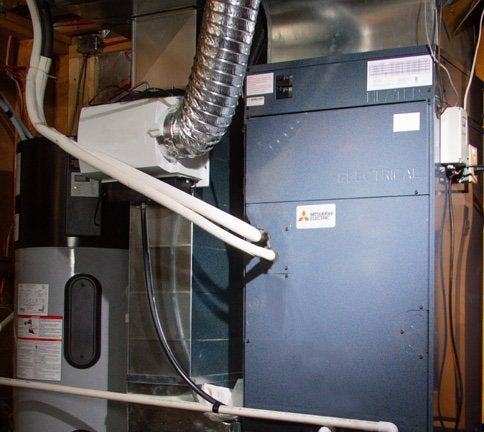
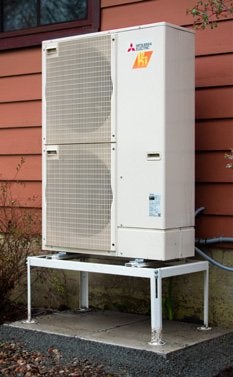
In this case they needed a centrally ducted cold-climate system. They selected the Mitsubishi Electric Zuba heat pump. Designed to be ultra efficient in cold climates, the heat pump is the ideal solution for keeping their space warm in winter while saving money on their energy bills.
In fact, a study conducted by Natural Resources Canada found that homeowners using high-performance heat-pump systems can save 59% on heating costs, or $9.57 a day, over oil furnaces, depending on the region and home performance level.[i]
This is because heat pumps use the same vapour compression technology found in refrigerators and air conditioners to move heat inside. The result is not only lower utility bills, but also reduced greenhouse gas emissions and a heating solution that is better for homeowners and the environment.
"The Zuba heat pump is very, very efficient and has been a great install - we can't believe the savings." - Nancy Boivin, Homeowner
i Natural Resources Canada, “National Energy Use Database,” 2016.
[i]Based on a 2014 Study by Natural Resources Canada comparing electric baseboard heating vs. a heat pump. Potential savings may vary depending on type of equipment, personal lifestyle, system settings, equipment maintenance, and installation of equipment.
 |
 |
The Results
The Mitsubishi Electric Zuba Cold-Climate Heat Pump has proven to be extremely energy efficient, leading to significant savings on the household heating bills. The Boivin family has saved over $4,000 on energy costs in the first year, with percentage savings of over 60% - which is in line with the amount forecasted by the Natural Resources Canada study.
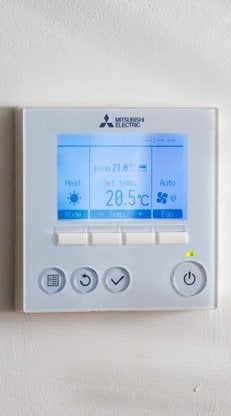
Even though they switched systems and technology, the Boivins experienced a seamless transition that allows them to enjoy increased efficiency at a lower cost. In addition to the dollar savings, the new heat pump means less carbon emissions, the convenience of heating and cooling from a single system, and space savings thanks to a much smaller unit. Their home insurance policy premium even decreased.
The system also performs exceptionally well in extreme cold weather, allowing them to remain comfortable in their home all year round.
"No matter what weather we've had, the heat pump has run throughout it all," says Nancy Boivin. "It's a great asset for our house, that's for sure."
Summary
Homeowner: Boivin family
HVAC Contractor: René's Total Home Comfort Ltd.
Location: Campbellford, Ontario
Industry: Residential
Size: 1,800 square feet
Challenges: Find a new energy-efficient heating solution that lowers high utility bills for a family home in rural Ontario.
Selection Criteria:
- Energy-efficient heat source
- Excellent cold-climate performance
- Superior alternative to oil furnace
Design/Engineering Solution:
3-ton Mitsubishi Electric cold-climate system with a centrally ducted vertical air-handling unit.
Mitsubishi Electric outdoor unit model:
- 1 X PUZ-HA36NHA5
Mitsubishi Electric indoor unit model:
- 1 X PVA-A36AA7
Results:
- Significant energy savings of over $4,000/year
- Continuous comfort and warmth during winter
Frequently Asked Questions
How much energy can homeowners save by switching from oil heating to a cold-climate heat pump?
In this case study, switching from an oil furnace to a Mitsubishi Electric Zuba Cold-Climate Heat Pump resulted in energy cost savings of more than $4,000 in the first year, representing savings of over 60%.
Can a cold-climate heat pump provide reliable heating during extreme Canadian winters?
Yes. The Mitsubishi Electric Zuba Cold-Climate Heat Pump is designed to provide reliable heating in cold Canadian conditions. In this installation, the system maintained continuous comfort and warmth throughout the winter, including periods of extreme cold.
What type of cold-climate heat pump system can replace an oil furnace?
A centrally ducted cold-climate heat pump can provide an energy-efficient alternative to an oil furnace. This project used a 3-ton Mitsubishi Electric system with a centrally ducted vertical air-handling unit for whole-home heating and cooling.