
Designing LEED-Certified Waterfront Condos: Aquabella Case Study
The Challenge
Located on Toronto’s eastern waterfront, Aquabella is a luxury residential condominium that’s part of the master-planned Bayside community, a mixed-use neighbourhood designed for people to live, work, learn and play. The third building in Tridel’s phased residential development, the luxury condo features a unique architectural design with private terraces overlooking Lake Ontario and suites created with end-users in mind.
The initial conception of the project was geared towards achieving a LEED Platinum Certification. With sustainability at the heart of the design, Tridel sought locally sourced construction materials, low-flow plumbing fixtures and Energy Star appliances.
For heating and cooling, they wanted the highest-quality, most energy-efficient technology available on the market. Additionally, the developer wanted to minimize bulkheads in the suites so residents could enjoy a cleaner design and more livable space. Minimal noise and the ability for simultaneous heating and cooling year round were other key considerations. Finally, the heating and cooling had to integrate with a smart control and monitoring system and improve indoor air quality.
“Mitsubishi Electric has great VRF systems and their team was extremely pleasant to deal with.” — Bruno Giancola, Senior VP Project Management & Innovation and Sustainability, Tridel
The Solution
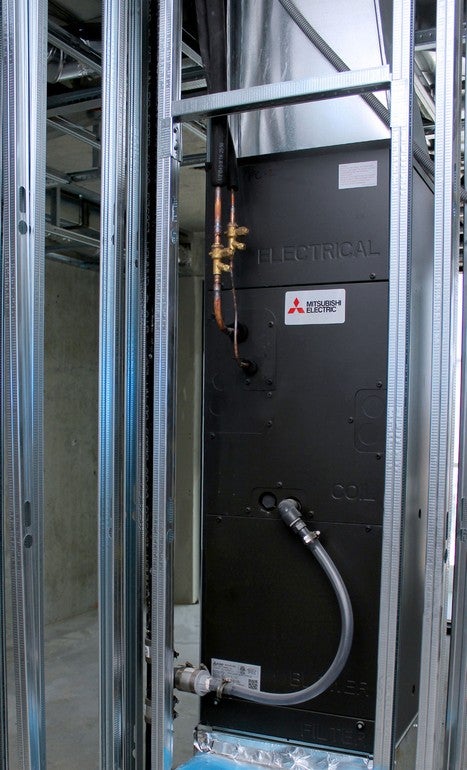
Desiring a first-class product that would work with the Aquabella’s design and be exceptionally energy efficient, Tridel reviewed several companies and systems. After careful consideration, they selected a VRF (Variable Refrigerant Flow) system from Mitsubishi Electric.
“We were impressed with the quality of product and level of service. But what really swung us in their direction were the glowing reports and recommendations we received from the trades.”
Adrian Wang, Director, Innovation and Sustainability at Tridel
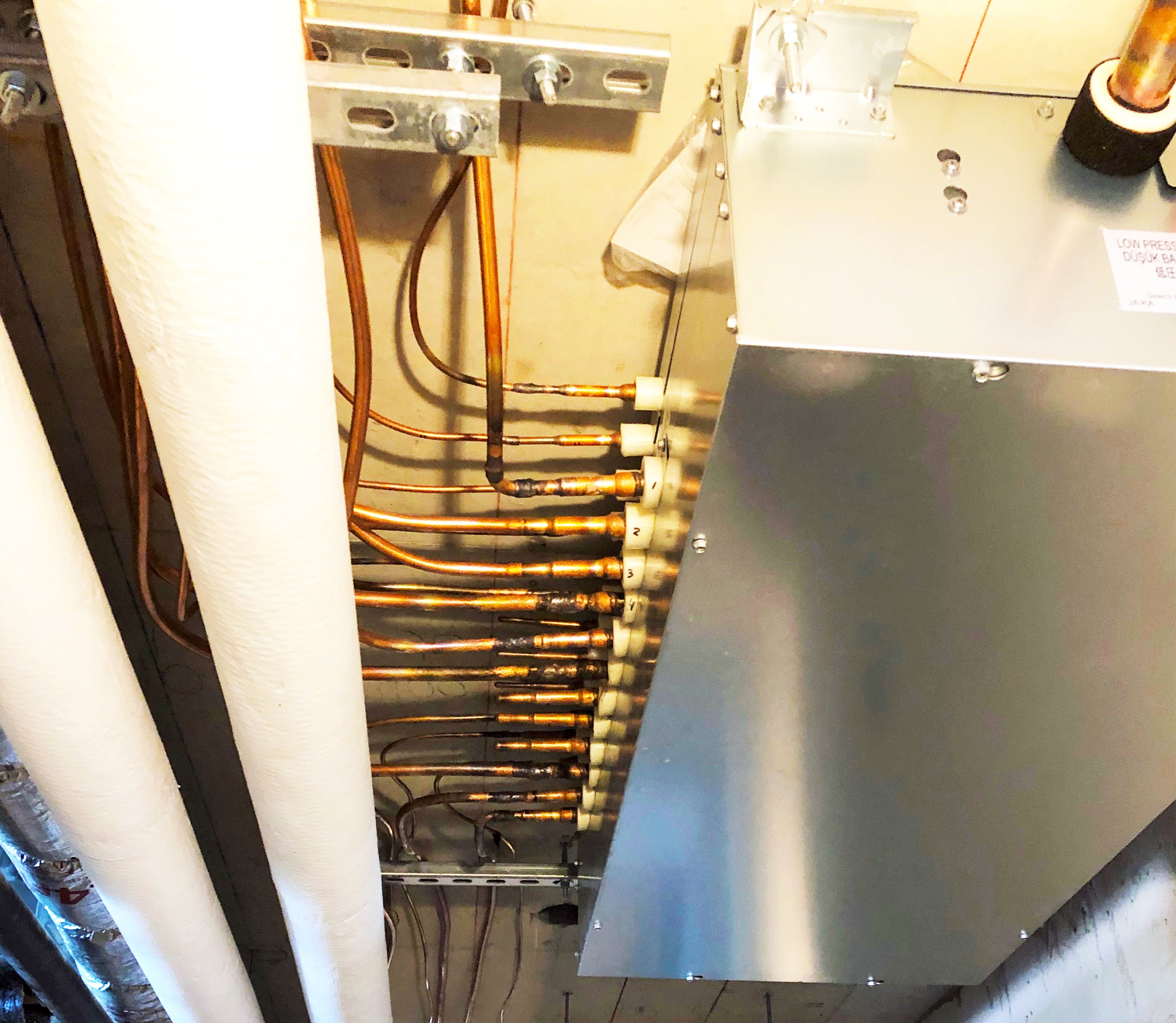
In a conventional point tower, there are very few offsets and changes to the shape of the building. But to maximize lake views for every unit, the Aquabella has a heavily terraced and articulated architecture, which can make incorporating heating and cooling pipes more complex. The VRF system resolved this challenge as it runs horizontally throughout the building, allowing for flexibility in the exterior design.
Another notable feature of the VRF system is its ability to provide superior HVAC zone control, enabling each unit to control its own heating and cooling. This means residents in the sun-facing southern façade can cool their units, while those on the north side of building can introduce heating — a combination that is often necessary to keep everybody comfortable during the shoulder seasons.
The system is also much more energy efficient. Instead of having HVAC units combating each other by running the boiler and chiller plants concurrently, the VRF units optimize efficiency by moving heat around a building’s footprint as required. The result is a greener building with reduced CO2 production and energy consumption. The whisper-quiet system is also quieter and has more unobtrusive bulkheads than competitors, minimizing noise and disruption for residents.
The Results
At the time of writing, the Aquabella is in the final stages of construction before occupancy begins throughout late 2020 and early 2021. The Mitsubishi Electric VRF system is a core contributor to Tridel’s pursuit of a LEED platinum certification, as it can help residents save up to 60% on energy. Wang also believes that the low noise and minimal bulkheads that come with the Mitsubishi Electric VRF system have been important selling features for condo purchasers, as they allowed Tridel to optimize the suite layouts and beautiful lake views.
Summary
Toronto, Ontario
Multi-family
176 suites
Design a LEED Platinum building with precise individual in-suite heating and cooling units that minimize noise and bulkheads.
- Simultaneous heating and cooling year round
- Reduced / smaller footprint
- Energy monitoring
- Low noise
- Minimal in-suite bulkheads
- LEED Platinum
- Phased installation
- VRF integration to smart control monitoring system
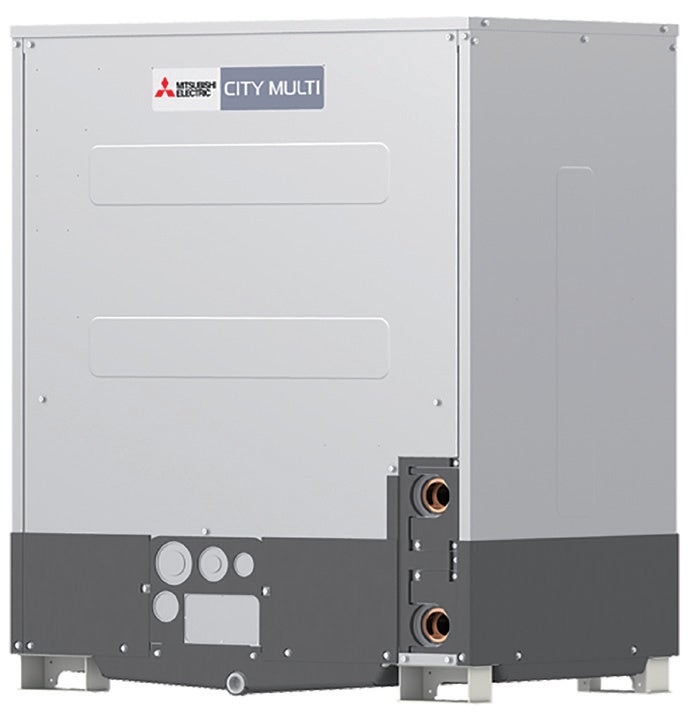
Mitsubishi Electric Water-Source VRF heat recovery system with condenser units installed floor by floor:
- 40 X PQRY-P**TLMU-A1
- 3 X PUMY-P48NKMU2
Mitsubishi Electric Indoor unit models:
- 129 X PEFY-P**NMAU-E3
- 174 X PVFY-P**NAMU
- Beautiful modern suites with functional layout
- Highly efficient units that redistribute energy
- Comfortable indoor temperatures year round
Frequently Asked Questions
Why was a Mitsubishi Electric VRF system selected for the Aquabella condominium project?
The project required an energy-efficient HVAC solution that could support LEED Platinum goals, simultaneous heating and cooling, low-noise operation, minimal in-suite bulkheads and integration with smart control and monitoring systems.
How did VRF help address Aquabella’s terraced waterfront design?
Aquabella’s heavily terraced architecture made traditional heating and cooling distribution more complex. The Mitsubishi Electric VRF system helped solve this by allowing flexible horizontal routing through the building while supporting the exterior design and maximizing lake views.
What benefits does VRF offer for multi-family residential HVAC design?
VRF gives each suite precise zone control, supports simultaneous heating and cooling during shoulder seasons, reduces energy consumption by redistributing heat where needed and helps minimize noise and bulkheads for a cleaner living space.