
Optimized Storage and Delivery for Every Hot Water Demand
Mitsubishi Electric water heating systems are engineered with the flexibility to serve a wide variety of building types and usage patterns, supporting both low-recovery/high-storage (LR/HS) and high-recovery/low-storage (HR/LS) design strategies. This adaptability allows you to right-size equipment for either intermittent or continuous hot water demand, accommodate mechanical room constraints, and align with available utility capacity.
LR/HS strategies utilize larger hot water storage to efficiently handle periodic bursts of high demand, even where utility supply is limited. This approach enables the use of lower-capacity heat pump equipment while still meeting peak loads—making it ideal for multi-family, educational, and commercial office buildings with varying occupancy or remote fixtures. Conversely, HR/LS systems focus on rapid recovery with a smaller storage footprint, reducing standby heat losses and maximizing valuable space—beneficial for buildings where mechanical room space is at a premium. This flexibility makes Mitsubishi Electric solutions highly adaptable across the full spectrum of commercial, residential, and institutional projects.
To address these needs, Mitsubishi Electric heat pump water heating systems offer both “single-pass” and “multi-pass” circulation, allowing precise alignment to your building design and usage profile.
The Ecodan CAHV system features a multi-pass approach, where fluid cycles through the heat exchanger multiple times to reach the storage temperature. This method delivers reliable performance across a range of conditions and readily integrates with established circulation and mixing strategies. Multi-pass systems like the CAHV are a practical choice for both new and retrofit applications, as they integrate seamlessly with a wide range of plant configurations and are well-suited to standard circulation and mixing practices commonly used in Canadian buildings.
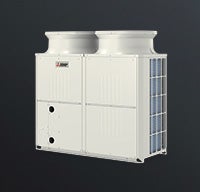
For projects seeking maximum hot water delivery at the highest efficiencies, the QAHV CO₂ Heat Pump Water Heater utilizes an innovative single-pass approach through a spiral gas-cooler heat exchanger. In this configuration, city-supply temperature water is heated to DHW storage temperatures in a single pass through the heat exchanger between periods of peak demand, allowing larger storage tanks to be effectively utilized and maximizing the available volume of usable hot water. This makes the single-pass, high storage strategy especially effective for applications with significant peak demands.
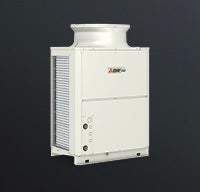
From peak demand performance to space-saving designs, Mitsubishi Electric delivers intelligent, energy-efficient hot water solutions built to adapt—ensuring reliable comfort across every building type and application. To learn more or find the right solution for your next project, connect with our team or visit MitsubishiElectricHydronics.ca
Frequently Asked Questions
What is the difference between low-recovery/high-storage and high-recovery/low-storage water heating strategies?
Low-recovery/high-storage (LR/HS) systems use larger storage tanks to handle short periods of high hot water demand, even when utility capacity is limited. High-recovery/low-storage (HR/LS) systems use faster recovery with smaller storage, helping reduce standby losses and save mechanical room space.
When is a multi-pass system like the Ecodan CAHV a good fit?
The Ecodan CAHV is a good fit for projects that require reliable hot water performance across a range of conditions. Its multi-pass approach integrates well with common circulation and mixing strategies, making it suitable for both new construction and retrofit applications.
Why is the QAHV CO2 Heat Pump Water Heater suited to high-demand applications?
The QAHV uses a single-pass approach that heats city-supply water to domestic hot water storage temperatures in one pass. This allows larger storage tanks to be used effectively and helps maximize usable hot water during periods of peak demand.
Resources & Further Reading
- DHW’s Role in Electrification — Explores how domestic hot water systems fit into building electrification strategies, including heat pump water heating and energy-efficient system design.
- Commercial CO2 Heat Pump Water Heaters — Discusses commercial CO2 heat pump water heater technology and its role in efficient, lower-carbon hot water production.
- Knowing The Low-flow Culture: New Approaches in Water- and Energy-efficient Plumbing — Covers water- and energy-efficient plumbing strategies, including hot water delivery, recirculation, and distribution considerations.