
Climaveneta Air to Water Heat Pump Solutions
The term “heat pump” has many misnomers and gets thrown around far too loosely these days as the conversation shifts towards sustainability, low carbon emissions, and building electrification. It is important to remember that a heat pump can exist in a wide variety of sizes and types to suit endless applications – when designed and implemented properly.
One-Size-Fits-All Solutions Are Over
Heat Pumps provide an advantage because they are powered by electricity, and when the electricity is from clean sources, like wind or hydro, they can heat buildings at a fraction of the carbon emissions of traditional fossil fuels. The second key benefit with a heat pump is the Coefficient of Performance, or COP, which is the ratio of thermal output to power input. A Heat Pump’s COP will be influenced by outside air temperature and at worst-case conditions will typically be at or above 2, and at optimal conditions can be 4 or even higher.
A niche subset of heat pumps that are quickly gaining momentum in the Canadian market are Air-to-Water Heat Pumps, which, aside from electric boilers, are the main alternative to traditional fossil-fuel based boilers that are commonplace in today’s hydronic heating systems. Heat Pumps sound attractive, so when it comes to hydronic systems, why are they still lurking in the shadows?
When it comes to Air-to-Water Heat Pumps, where heat is extracted from the air outside of the building, the machine’s ability to perform efficiently and provide useful heating will be greatly influenced by the outside air temperature. Any heat pump will have practical limitations due to the refrigerant that is being used, and it will eventually shut off when it can no longer effectively provide useful heat to the building. This is commonly referred to as the low ambient cut-out temperature. When it comes to designing with Air-to-Water Heat Pumps, the most critical design consideration that the Canadian market is fixated on, and the first question to come up when you start the heat pump conversation with a Contractor or Engineer is:
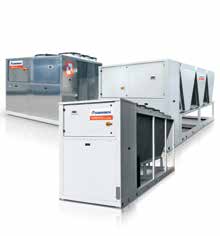
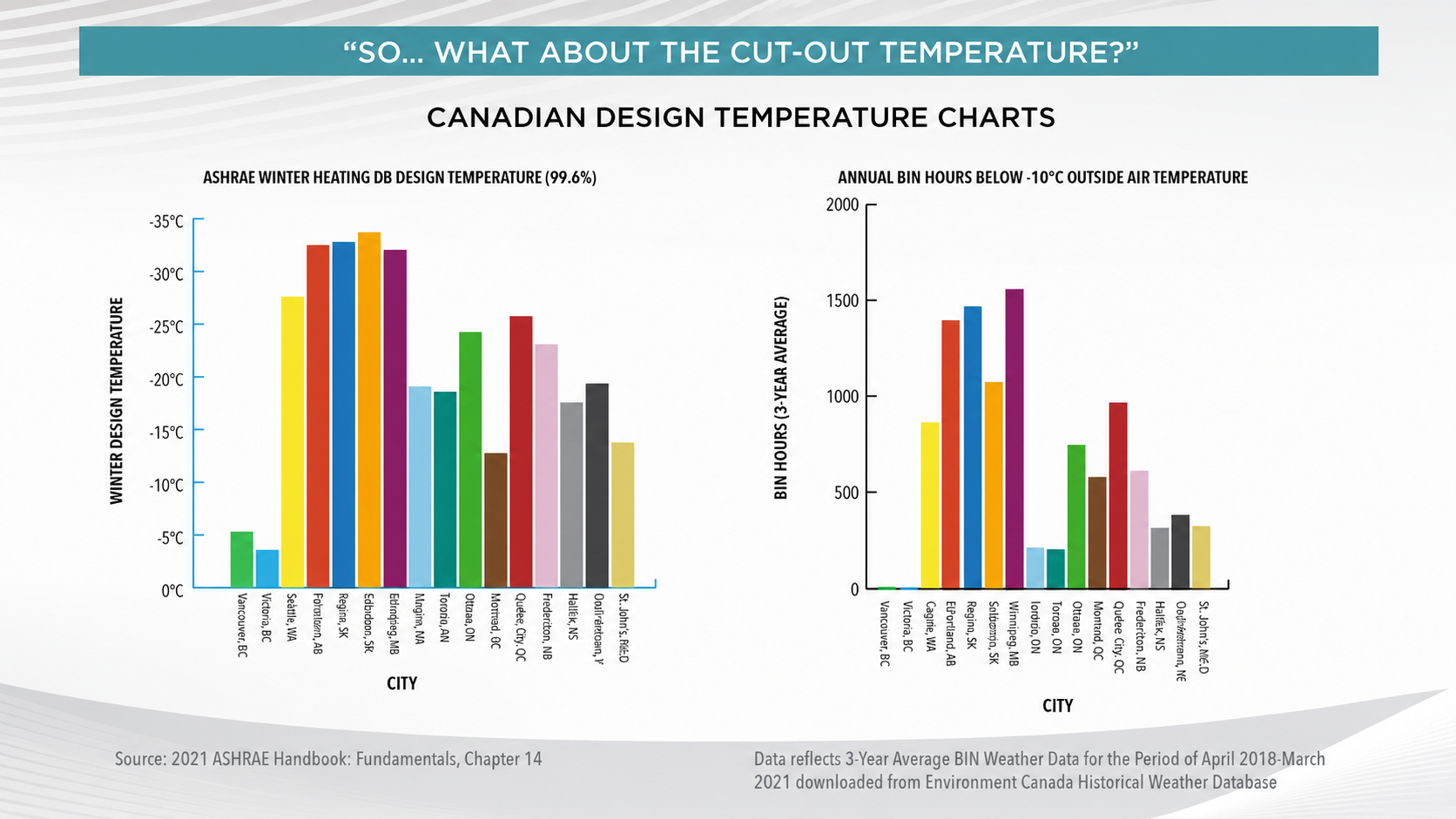
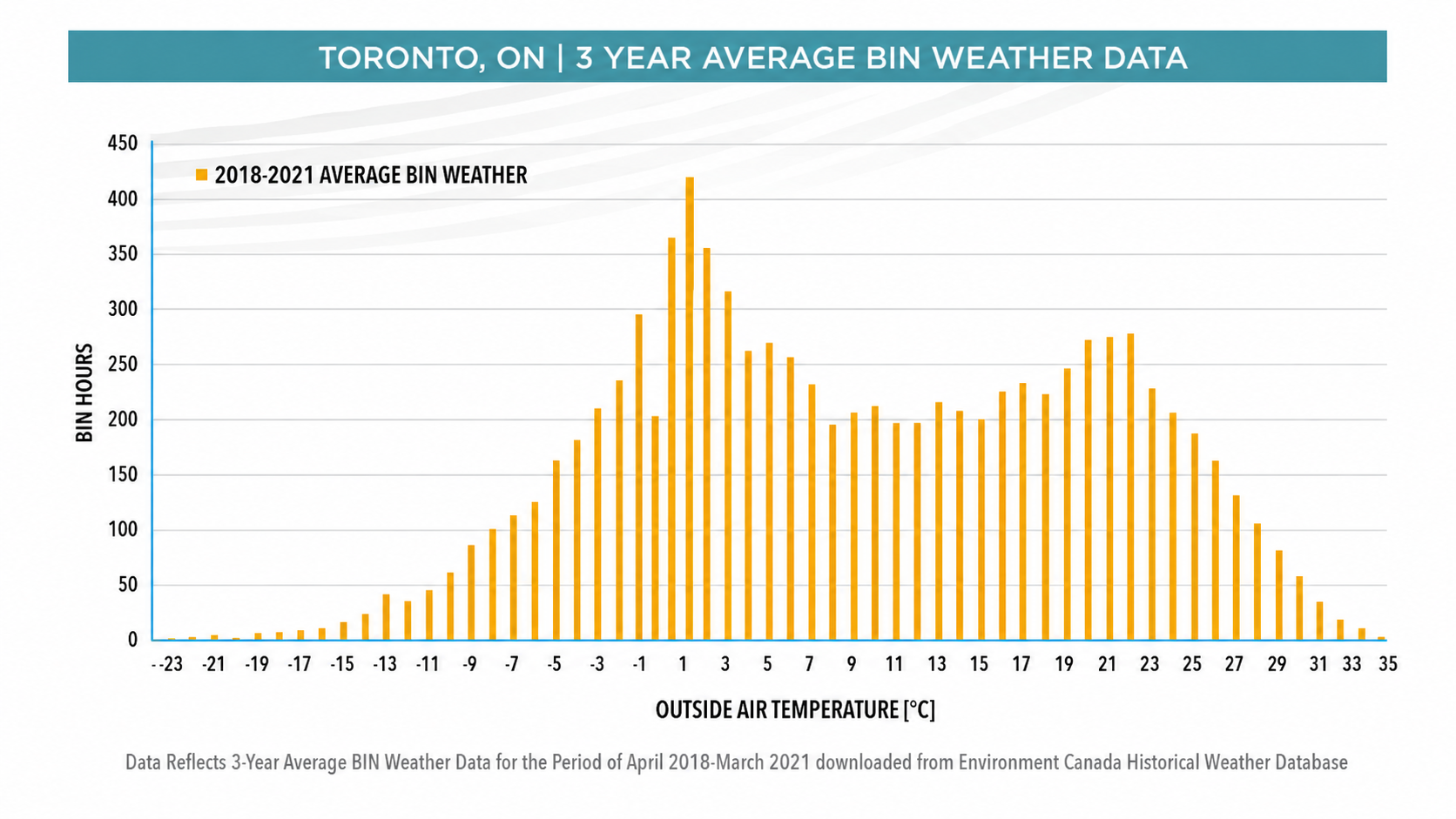
While there have been great strides in improving heat pump performance and pushing the limits to design them to operate in colder temperatures, usually, the design temperature is below the heat pump cut out temperature and can become an obstacle. In these cases, an auxiliary heat source will be required when using Air-to-Water Heat Pumps. However, it is important to recognize the frequency of time where it is colder than the cut-out temperature is relatively few hours, typically just a few weeks of the heating season. In favourable climates, such as coastal cities or even Toronto, this can be less than a week of the entire year. When it comes to heat pumps, it’s about using the heat pump when it makes sense to do so, without being fixated on a one-size-fits-all solution.
Consequently, the technology is often dismissed early in the design process because it does not fit a set of prescribed criteria. While the cut-out temperature it is an important and valid question, in an evolving regulatory era where sustainability and the environment are paramount, it is now only a smaller piece of the larger puzzle of a more resilient, low-carbon built environment.
The cut-out question has long inhibited widespread adoption of the technology for a variety of reasons. Simply put, they are different than what we are used to working with, but that doesn’t mean they can’t do the job.
LOW-CARBON HYDRONIC SYSTEMS FOR NET ZERO GOAL
Primary criteria that are important to designers and building owners when selecting a new mechanical system have traditionally been equipment, installation costs and operating costs. Therefore, it’s no surprise that gas-fired boilers have been the norm in Canada in hydronic systems for decades due to low-cost natural gas, the simplicity of designing with hydronic boilers, not to mention they are relatively inexpensive.
The design criteria in which Engineers use to ascertain whether a particular design is the worst or the best, is undergoing substantial change as the market shifts towards prioritizing energy efficiency and sustainability as we strive to meet our emission reduction targets. Building owners and Engineers are starting to look onward to make sure that the decisions they make today will benefit their building over the long term with reduced emissions and lower operating costs. While heat pumps are comparable today in operating costs to traditional gas boilers, as fossil fuel prices rise, due to a Carbon Tax, they will soon save building owners money over natural gas systems.
Air-to-Water Heat Pumps can be shown to significantly reduce overall carbon footprint, reduce natural gas usage, and Energy Use Intensity (EUI) when designed properly into the mechanical system. This technology will be a fundamental building block of the zero-carbon buildings of the future.
Building & Energy Codes, as well as the metrics used to define what constitutes a “cutting-edge” and sustainable design are becoming more stringent. Limits on Energy Use Intensity (EUI), Thermal Energy Demand Intensity (TEDI), Greenhouse Gas Intensity (GHGI), among other metrics, are being closely scrutinized, and the bar is consistently being raised. While these metrics may be optional and modest today, they will become prerequisites and even more stringent as time moves forward to achieve net-zero in new buildings by 2030. The introduction of a more aggressive and meaningful Federal carbon tax will also transform the industry towards electric heating solutions, which will further drive innovation and improvement in the heat pump technologies themselves, along with investment in cleaner energy sources, which will in turn further improve the case for heat pumps over conventional fossil fuels. Which brings us full circle back to Air-to-Water Heat Pumps. By focussing on improving building designs with both active and passive energy reduction measures, we can improve our buildings’ Carbon Footprint.
Air-to-Water Heat Pumps are one part of a wider solution, but if the goal is to reduce fossil fuel consumption in parallel with other measures, then our only alternative choices are electric resistive heat or heat pumps. Since a heat pump will always be more efficient than an electric boiler, it is clear that heat pumps will become more common on the path to 2030 in hydronic systems.
Do Air-to-Water Heat Pumps have limitations? Yes, but there are workarounds. In a lot of cases, an auxiliary heat source will be needed, but the days of seeking one size fits all solutions are finished, as it is often not compatible with a low-carbon future. This should not be viewed as a negative, but rather a benefit by providing buildings with resiliency and redundancy, and the potential for flexible dual-fuel systems if a natural gas boiler is selected. The market dynamics and criteria to define what constitutes a good HVAC design are being redefined, and many engineers have already future-proofed their designs and buildings by mastering and implementing the technology in retrofit and new construction projects alike.
It’s not so much a matter of if Air-to-Water Heat Pumps will become the norm for hydronic systems, but rather when the market will recognize these as viable alternatives and understand how the technology fits into a low carbon building.
So instead of asking “What is the cut-out temperature”, the real question is “What is the best way to make use of the heat pump while it can operate?”
To find out more information about Climaveneta and our line of products please contact us at www.climaveneta.ca.
Frequently Asked Questions
Why is cut-out temperature an important design consideration for air-to-water heat pumps?
Cut-out temperature helps engineers understand when an air-to-water heat pump may need support from an auxiliary heat source during colder outdoor conditions.
How can air-to-water heat pumps support low-carbon hydronic system design?
Air-to-water heat pumps reduce reliance on fossil fuel boilers by using electricity to provide efficient heating for hydronic systems, especially when paired with cleaner power sources.
Do air-to-water heat pumps require backup heating in Canadian climates?
In many applications, yes. An auxiliary heat source may be required during colder periods, but the heat pump can still handle a large portion of the annual heating load.
How do air-to-water heat pumps help buildings move toward net-zero goals?
When designed properly, air-to-water heat pumps can reduce natural gas use, lower carbon emissions, and improve energy performance in new construction and retrofit projects.
Resources & Further Reading
- Efficiency Canada — Canadian Heat Pump Myth Buster — Canadian resource addressing common heat pump misconceptions, including air-to-water heat pumps for hydronic distribution systems
- Canada Green Building Council — Zero Carbon Building — Canadian standards and certification resources for low-carbon and zero-carbon building design
- Natural Resources Canada — High-Performance HVAC Systems — Research on cold-climate heat pump systems, low-GWP HVAC technologies, and zero-carbon building solutions